


AlKhattaba - Muslim Marriage
4.21.01K Reviews
App Specs
- Version
- 9.6.0
- Updated On
- License
- Free
- Downloads
- 5,000,000+
- Developer
- Meet Muslims for Marriage - تعارف وزواج للمسلمين
- Categories
- Lifestyle
- Platform
- Android
Screenshots
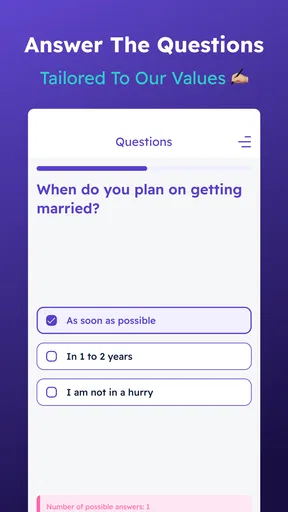

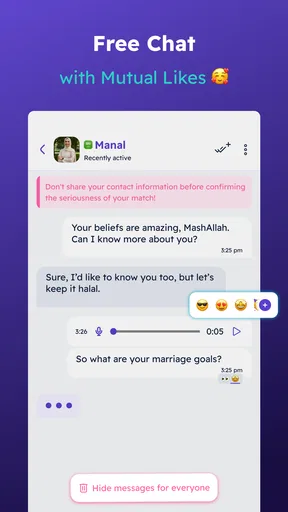
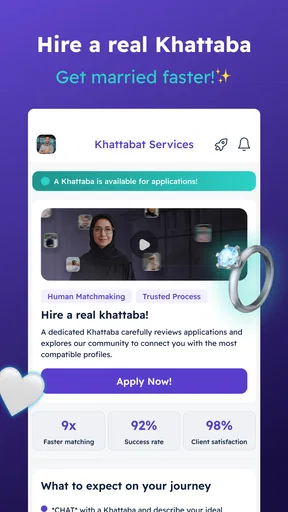
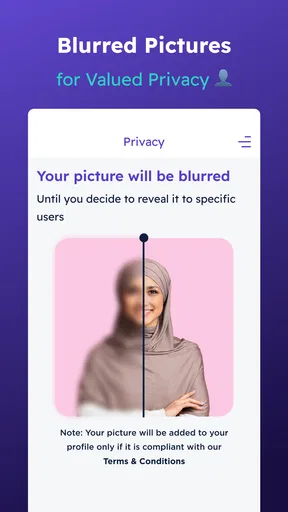

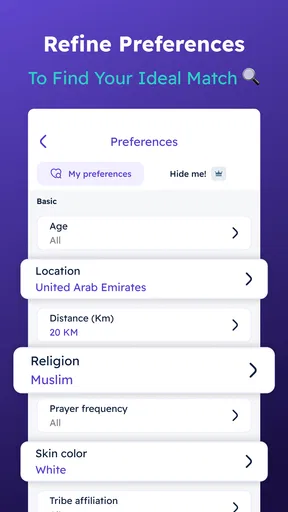
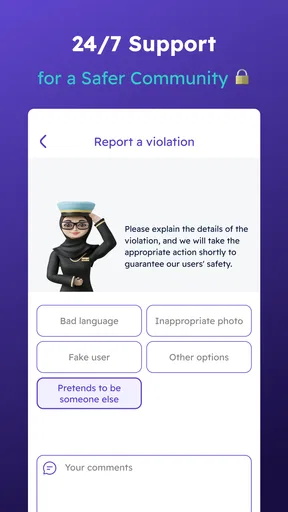
 Analysis by AppCompare
Finding a serious Muslim marriage prospect is not the same as browsing an ordinary dating app. I approached AlKhattaba - Muslim Marriage with that distinction in mind, looking less at the initial excitement of matching and more at whether it could support a careful, respectful process over time. It is a free lifestyle app from Meet Muslims for Marriage - تعارف وزواج للمسلمين, built around meeting, chatting, and pursuing marriage within a halal-minded setting.
My first impression was that the app makes sense for people who already know what they want. It is not trying to turn marriage into a casual game. The mature 17+ rating also sets the right expectation: this is an adult social environment, and users should approach conversations with judgment, patience, and clear boundaries. The app has been available since August 20, 2014, which gives it a more established feel than a brand-new matchmaking service.
The store summary presents it as a place to meet, chat, love, and marry a Muslim partner, while its short store description is simply “AlKhattaba.” In practice, that compact positioning is useful: the app is aimed at Muslim singles who want a matrimonial route rather than an endless stream of low-commitment conversations. Whether it becomes valuable depends heavily on how deliberately you use it.
From the first week to a lasting routine
I find that the first week is when it helps to decide how AlKhattaba will fit into your day, rather than letting new conversations set the pace for you. A brief, regular check-in can make it easier to respond thoughtfully and notice which introductions deserve more attention. I would also consider how readable and manageable the app feels on your own device before making it part of a longer routine.
Why the first week feels promising
The strongest early appeal is focus. General dating platforms often mix people seeking friendship, entertainment, short-term romance, and marriage. Here, the marriage purpose is much clearer, so I found it easier to judge a profile by practical questions: Is the person genuinely ready for commitment? Do their values and expectations appear compatible? Are they communicating respectfully?
That focus can save time, but it does not remove the need for screening. A matrimonial label is not proof that every person is equally serious, honest, or compatible. I would still read profiles slowly, avoid making decisions from a single attractive photograph, and pay attention to whether someone answers direct questions consistently. The app can organize introductions; it cannot perform the emotional and family-level work that marriage requires.
During an initial week, the natural temptation is to start too many conversations. I think that is one of the easiest ways to make the experience tiring. A better approach is to choose a small group of promising profiles, write a personal opening message, and see who responds with similar effort. This makes the app feel less like a queue of strangers and more like a tool for intentional introductions.
Worth Reading Before You Choose

EA SPORTS FC Mobile 26 Is a Bigger Football Game, but It Takes Time

Flipboard Shows What News Apps Must Do Beyond the Feed

Switching to Android Auto Means Rethinking Your Driving Routine

Google Calendar Makes a Crowded Week Easier to Manage

Ludo King Makes the Most of the Minutes Between Plans

Baby Panda World Brings Quick Play to Modern Phones, but Its Game Library Feels Busy
A realistic example would be someone working long hours who has already tried meeting people through friends and community circles. They might use the app in the evening to review a few profiles, begin one or two respectful conversations, and set aside time later to discuss serious topics. That workflow is more sustainable than checking constantly throughout the day, especially when the goal is marriage rather than quick attention.
What to discuss before investing emotionally
One useful habit is to move beyond flattering small talk early, without turning the first message into an interrogation. Questions about location, marriage timeline, family involvement, religious practice, work expectations, and previous commitments can reveal major differences before either person becomes overly attached.
I would also watch for communication patterns. Someone who repeatedly avoids basic questions, pushes for secrecy, or pressures you to move faster deserves caution. Conversely, a person who communicates clearly but does not reply instantly should not automatically be dismissed. A marriage-focused app rewards patience more than constant availability.
Another practical tip is to keep notes privately about what matters to you before browsing. It is easy to adjust your standards unconsciously when several conversations begin at once. Separating genuine essentials from preferences helps prevent the app from turning into an exhausting comparison exercise.
The role of family and trusted people
For many Muslims, marriage is not only a private relationship between two individuals. Family expectations, cultural background, religious practice, and community reputation may all matter. I would therefore treat the app as an introduction point, not as a complete courtship system.
If a conversation becomes serious, involving a trusted person at an appropriate stage can provide perspective and safety. This is especially important when the two people live far apart or have never met through shared community connections. A profile and a pleasant chat are only early signals; they are not a substitute for real-world verification and respectful family conversations.
Where the free model helps, and where it may become a friction point
AlKhattaba is free to install and use as an entry point, which lowers the barrier for people who want to explore the community before committing money. At the same time, in-app purchases range from $0.99 to $360.00 per item. That is a very wide range, so I would be careful about spending based on early excitement.
My advice is to use the free experience long enough to decide whether the app’s audience and communication style suit you. Only then should you consider any optional purchase, and only if you understand exactly what it changes for your own workflow. Paying cannot make another person sincere, compatible, or ready for marriage. It may improve convenience, but it should not replace careful judgment.
Why month-to-month value depends on discipline
The novelty of any matchmaking app fades quickly. After the first few days, the important question becomes whether the service helps you maintain a sensible process. In my view, AlKhattaba has recurring value when used as a structured channel for introductions, not as a background source of constant validation.
A monthly routine might involve reviewing new possibilities once or twice a week, closing conversations that clearly do not fit, and giving serious prospects enough attention to reach meaningful topics. This prevents an overflowing inbox from becoming a collection of unfinished emotional threads. It also makes it easier to notice whether someone’s behavior remains consistent over time.
The app is particularly useful for people whose local social circle is limited, for Muslims living away from their family’s home country, or for those who want to be explicit about marriage from the beginning. It can widen the pool beyond immediate acquaintances while preserving a more specific purpose than mainstream dating services.
However, it is not automatically better than introductions through family, friends, a mosque, or a community network. Those alternatives may provide more context about a person and can make accountability easier. AlKhattaba is stronger when your usual network is small or difficult to access; a trusted personal introduction may be better when community knowledge and family support are readily available.
Keeping conversations useful instead of repetitive
One source of long-term value is learning to use conversations as a gradual filter. Start with basic compatibility, then move toward lifestyle and expectations, and only later discuss plans that require deeper trust. This sequence reduces the chance of spending weeks on someone whose fundamental goals differ from yours.
I would avoid turning every chat into a performance. A polished profile can attract attention, but ordinary consistency is more revealing. Does the person remember what you said? Do they respect your pace? Can they disagree without becoming insulting? Those details matter more than a clever opening line.
It also helps to set a personal stopping rule. If a conversation remains vague after a reasonable period, or if one person keeps postponing any meaningful next step, ending it politely can protect your time. The app’s value improves when you treat attention as limited rather than assuming every match deserves unlimited access to it.
Maintenance: the work users often underestimate
The maintenance burden is not mainly technical. It is emotional and organizational. You need to keep your profile honest, review whether your stated preferences still reflect your real priorities, and avoid leaving people uncertain when you already know the connection is not suitable.
Profile maintenance deserves care because a marriage-oriented audience needs useful information, not just attractive presentation. I would describe my intentions plainly, avoid exaggerating religious or personal qualities, and make sure the profile does not promise a lifestyle I am unwilling to live. Clarity attracts fewer unsuitable conversations, which is usually a benefit rather than a loss.
Privacy is another ongoing responsibility. I would not share sensitive financial details, identity documents, home information, or intimate photographs simply because a conversation feels warm. Moving from in-app chat to another channel should be a considered decision, not an automatic milestone. Meeting in person should happen carefully and in a public setting, with someone trusted aware of the plan.
Because the current version is 9.6.0 and the app supports Android 8.0 or later, users on older devices should check compatibility before planning around it. The broad device requirement is helpful for people who do not use the newest phone, but keeping the app current is still sensible for stability and security. I would also review notification habits so the service does not interrupt work, worship, sleep, or family time.
Where fatigue begins
The biggest fatigue comes from repetition. Browsing profiles, explaining the same personal details, and restarting conversations can feel like work, especially when many introductions end without a clear reason. That is normal for matchmaking, but it can still drain motivation.
There is also a difficult balance between being open-minded and protecting your standards. If you reject everyone over minor preferences, the pool becomes too narrow. If you ignore important differences because you are tired of searching, the app becomes misleadingly successful. I found that writing down non-negotiables and flexible preferences beforehand makes this decision less emotional.
Another limitation is that a digital profile gives incomplete context. You may learn what someone chooses to present, but not necessarily how they treat relatives, handle stress, manage money, or behave when plans change. Those qualities appear only through time, references, real conversations, and appropriate offline interaction. The app is useful at the front of the process, but it cannot carry the whole process.
Users who want casual flirting, fast chemistry, or a large entertainment-oriented dating pool may become frustrated. The marriage focus can feel slower and more serious than a mainstream app. That is not a defect for the intended audience, but it is a mismatch for anyone who is not genuinely considering marriage.
Who should use it, and who should choose another route
I would recommend trying AlKhattaba if you are a Muslim adult seeking marriage, are comfortable taking conversations slowly, and want a platform where matrimonial intentions are central. It is also worth considering if conventional introductions have not reached people who share your background or priorities.
I would skip it if you are only curious, unwilling to communicate clearly, or hoping an app will make difficult relationship decisions for you. People who strongly prefer introductions through relatives, local religious communities, or professional matchmaking may find those routes more personal and accountable.
It is also not the right choice for someone who dislikes maintaining boundaries online. The app can create opportunities, but it requires users to manage privacy, screen carefully, end unsuitable conversations, and recognize pressure tactics. If that responsibility sounds exhausting, a trusted offline introduction may be a better fit.
How it compares with ordinary dating alternatives
Compared with a general dating app, AlKhattaba offers a clearer reason for being there. You are less likely to need a long explanation that you are seeking marriage rather than casual dating. That can reduce ambiguity, particularly when discussing values and family expectations.
Compared with family matchmaking, it offers more direct control. You can decide whom to approach and how quickly to proceed instead of relying entirely on relatives to choose introductions. The trade-off is that you must perform more of the screening yourself, and you may have less built-in knowledge about each person.
Compared with local community events, the app can be more convenient for people with busy schedules or limited access to Muslim social circles. The downside is that online interaction can encourage people to present an idealized version of themselves. I would use the app to expand possibilities, then bring the relationship into trustworthy real-world contexts when appropriate.
Does it earn lasting space?
AlKhattaba earns a place on my phone when I treat it as a focused tool rather than a daily habit that demands constant attention. Its long availability, large audience of over five million installs, and average rating of 4.2 from around 246 thousand ratings suggest that it has reached many people, but those figures do not decide whether it is right for an individual. The quality of your experience will depend on the people you encounter and the care you bring to the process.
The developer, Meet Muslims for Marriage - تعارف وزواج للمسلمين, has kept the product centered on a specific need instead of presenting it as a general social playground. That specialization is its main advantage. It gives serious users a clearer starting point, while also making the app less appealing to anyone seeking casual, low-pressure interaction.
My long-term verdict is cautiously positive. I would keep it installed during an active search, check it on a planned schedule, and remove it once a serious relationship has moved into a more appropriate stage. I would not pay impulsively, disclose private information too early, or confuse frequent conversations with progress.
The lasting value is not in endless browsing; it is in helping the right introduction become a thoughtful, well-screened conversation. If you are ready for that work, this free lifestyle app is worth trying. If you want instant certainty or effortless romance, the experience will probably feel disappointing after the first week.
Pros
- Designed specifically for Muslims seeking marriage
- not casual dating.
- Profiles can help users focus on faith
- values
- and marriage intentions.
- Useful for people seeking culturally compatible matches.
- May make it easier to connect with Muslims beyond your local community.
- Marriage-focused design can reduce pressure from conventional dating apps.
Cons
- The quality of matches may vary depending on your location.
- Some features or communication options may require payment.
- Users should carefully verify profiles before sharing personal information.
- The app may have fewer active members than mainstream dating platforms.
- Privacy preferences and religious expectations may differ between users.
FAQs for AlKhattaba - Muslim Marriage
What is AlKhattaba - Muslim Marriage, and who is it designed for?
AlKhattaba - Muslim Marriage is a matchmaking app created for Muslims who are looking for marriage rather than casual dating. It is designed to help users discover compatible potential spouses while considering religious values, personal preferences, and family expectations. The app may be especially useful for people who prefer a more culturally respectful and marriage-focused alternative to general dating platforms.
How does matching and communication work in AlKhattaba?
After creating a profile, users can usually provide information such as their location, interests, religious background, and preferred spouse characteristics. The app then presents potential matches based on available profile details and search preferences. Communication features may depend on the account type and the other person’s settings. Users should review the current in-app rules, privacy options, and subscription requirements before starting conversations.
Is AlKhattaba safe and private to use?
AlKhattaba includes features intended to support a more private and respectful matchmaking experience, but no social or marriage app can guarantee complete safety. Avoid sharing sensitive details, financial information, passwords, or private documents with strangers. Check profiles carefully, use the reporting and blocking tools when necessary, and arrange any first meeting in a public place while informing someone you trust.
Does AlKhattaba require payment or offer in-app purchases?
The app may be free to download while offering optional premium services or in-app purchases. Depending on the current version, paid features can include enhanced visibility, additional communication options, advanced search tools, or other matchmaking benefits. Pricing and available features may vary by country, device, and promotion, so users should check the app store listing and subscription terms before confirming a purchase.
Can I delete my AlKhattaba account if I no longer want to use it?
Users who decide to stop using AlKhattaba should look for account, privacy, or settings options that allow them to deactivate or delete their profile. Simply uninstalling the app may not remove stored account information or make the profile invisible. Before deleting the account, cancel any active subscription through Google Play or the App Store and review the app’s privacy policy for details about retained data.


